The hole in a pen cap

Most ballpoint caps have a small hole through the top. Why would you drill a hole in something meant to keep ink in?

Category: Desk & tools

Be the first to vote on this one.

Feature. It lets you breathe if a child swallows the cap.

An international safety standard for pen caps asks for a minimum airflow through a cap, so that if one is inhaled it does not completely block the windpipe. The hole is how cap makers meet it.

The myth: You may be told the hole stops ink drying out or equalises pressure. The safety standard is the documented reason.

Source: ISO 11540: Writing instruments, caps, safety against inhalation, ISO.
The tiny pocket inside the jeans pocket

A mini pocket sits inside the right front pocket of your jeans, too small for a phone and too shallow for keys.

Category: Clothing

Be the first to vote on this one.

Feature. It was made for a pocket watch.

Levi Strauss & Co. says the small pocket was meant to hold a pocket watch, a common possession in the late 1800s. The oldest waist overalls in its archive, from 1879, already have it. The watch went out of fashion; the pocket stayed.

Source: Pockets full of history, Levi Strauss & Co..

Metal rivets on the corners of jeans pockets

Little copper-coloured studs sit at the corners of the pockets, doing nothing visible.

Category: Clothing

Be the first to vote on this one.

Feature. They stop the pocket tearing off.

Tailor Jacob Davis and Levi Strauss patented the idea of riveting the points of strain on trousers, such as pocket corners, on 20 May 1873. The pocket you overfill is held on by metal rather than thread alone.

Source: US Patent 139,121: Improvement in fastening pocket-openings, US Patent Office, via Google Patents.

The button on top of a baseball cap

A fabric-covered button sits on the crown of a cap. It does not button anything.

Category: Clothing

Be the first to vote on this one.

Feature. It covers the spot where the panels meet.

Fitted caps are sewn from six triangular-ish panels that all come together at the top. A covered button, sometimes called a squatchee, hides that join. Metal grommets or eyelets near it add ventilation.

Source: Baseball cap, Wikipedia.

The QWERTY keyboard layout

The most-used letters are scattered across the keyboard in an order that looks random.

Category: Keys & screens

Be the first to vote on this one.

Fault. It is history we never moved on from.

The layout comes from the 1870s Sholes and Glidden typewriter and was refined as typewriters evolved. It was not optimised for how we type now, but millions of people learned it and it stuck.

The myth: The popular story says it was scrambled to slow typists down so the type bars would not jam. Researchers have found little evidence for this; one line of research points instead to the needs of telegraph operators transcribing messages.

Source: Fact or fiction: the legend of the QWERTY keyboard, Smithsonian Magazine.

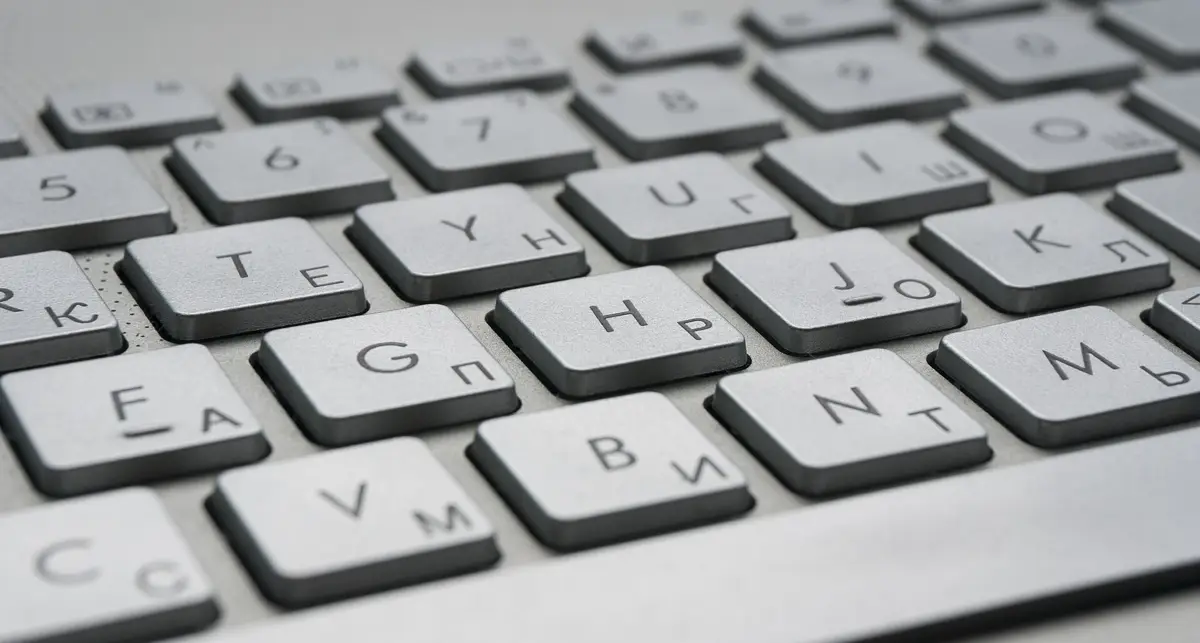
The little bumps on the F and J keys

Two keys on your keyboard have a tiny raised ridge or dot. The rest are smooth.

Category: Keys & screens

Be the first to vote on this one.

Feature. They let your fingers find home without looking.

Touch typists rest their index fingers on F and J. The bumps let them find that home position by feel, then reach every other key from there. The 5 key on a number pad often has one for the same reason.

Source: The reason for bumps on computer keys, Mental Floss.

A close-up of a laptop keyboard showing the F, G and H keys
Photo: Alexander-design, CC0, via Wikimedia Commons

Caps Lock, in prime position

One of the biggest, easiest-to-hit keys on the keyboard is used mainly by accident.

Category: Keys & screens

Be the first to vote on this one.

Fault. It is a leftover from typewriters.

Caps Lock descends from the shift lock on mechanical typewriters, which physically held the carriage in its upper-case position. That job made sense then. On a computer it mostly causes accidental shouting.

Source: Caps Lock, Wikipedia.

The Scroll Lock key

A key that does nothing visible on most computers, still printed on many keyboards.

Category: Keys & screens

Be the first to vote on this one.

Fault. A key that lost its job decades ago.

It arrived on the 1981 IBM PC keyboard so the arrow keys could scroll the screen instead of moving the cursor. Modern software rarely uses it, though some spreadsheet programs still react to it.

Source: Scroll Lock, Wikipedia.

Phone keys run 1-2-3 from the top

A phone keypad starts with 1 at the top. A calculator starts with 7 at the top. Same ten digits, opposite order.

Category: Keys & screens

Be the first to vote on this one.

Feature. It was tested, and it won.

The telephone layout came out of 1950s human factors research by Richard Deininger and others at Bell Labs under John Karlin. At the time few people used calculators, so the layout was chosen on dialling speed and accuracy alone.

Source: Telephone keypad, Wikipedia.

The lump on your laptop charger cable

A cylinder in the middle of the cable, which looks like a manufacturing defect or a forgotten sleeve.

Category: Keys & screens

Be the first to vote on this one.

Feature. It filters out electrical noise.

It is a ferrite core. It suppresses high-frequency interference travelling along the cable, which helps the device stay within the limits for radio interference.

Source: Ferrite bead, Wikipedia.

The lock switch on an SD card

A tiny slider on the side of a full-size SD card says "lock". You would assume it locks the card.

Category: Keys & screens

Be the first to vote on this one.

Fault. It only asks politely.

The slider does not physically block writing. It sets a flag that the device reading the card is supposed to respect, so a device that ignores it can still write. The card cannot enforce it alone.

Source: Secure Digital, Wikipedia.

The tiny hole in an airliner window

Near the bottom of the window, a pinprick hole in the middle layer of the plastic.

Category: Getting about

Be the first to vote on this one.

Feature. It shares the pressure load and clears fog.

Cabin windows are layered. The small breather or bleed hole in the middle pane lets the air gap equalise with the cabin, so the outer pane carries the full pressure difference. It also lets moisture escape, so frost forms on the outside rather than between the panes.

Source: The hole in your aircraft window, Migflug.

Airliner windows have rounded corners

Every passenger jet window is an oval, even though square windows would be easier to make and see out of.

Category: Getting about

Be the first to vote on this one.

Feature. Sharp corners crack aircraft.

The first jet airliner, the de Havilland Comet, suffered two fatal in-flight breakups in 1954. Investigators traced the failures to metal fatigue that started at sharp-cornered cut-outs in the fuselage. Stress concentrates at corners, so airliners since have rounded openings.

Source: Metal fatigue, and the de Havilland Comet, Britannica. Also: de Havilland Comet, Wikipedia.

Aircraft doors that open inward first

To open an airliner door you have to pull it inwards before swinging it out. It seems an odd, fiddly way to make a door.

Category: Getting about

Be the first to vote on this one.

Feature. Cabin pressure holds it shut.

A plug door is larger than its frame opening, so the cabin pressure pushes it against the frame. The higher the plane flies, the tighter it seals, and it cannot be opened in flight.

Source: Plug door, Wikipedia.

The arrow next to the fuel gauge

A small triangle sits next to the petrol pump icon on the dashboard. You may have driven for years without noticing it.

Category: Getting about

Be the first to vote on this one.

Feature. It points to the side your fuel cap is on.

The arrow shows which side of the car the fuel filler is on, handy in a hire car or at a crowded pump. It is credited to a Ford designer, Jim Moylen, who proposed it in the 1980s, and is now common across makes.

Source: What that little arrow next to the fuel gauge actually means, Motor1.

"Objects in mirror are closer than they appear"

A warning etched into the passenger mirror, as if the car were lying to you.

Category: Getting about

Be the first to vote on this one.

Feature. It is a legal trade-off for a wider view.

Passenger-side mirrors are often convex. They show more of the road but make things look smaller and farther away. The US federal vehicle standard requires the warning on such mirrors.

Source: 49 CFR 571.111: Rear visibility, US Code of Federal Regulations.

Train wheels are slightly cone-shaped

You would expect a train wheel to be a straight cylinder, with flat treads.

Category: Getting about

Be the first to vote on this one.

Feature. The cone steers the train round curves.

Tapered treads let a wheelset steer itself. On a bend the outer wheel rolls on a larger diameter than the inner, so both cover the right distance without slipping. The same taper pulls it back to the centre on straight track.

Source: Railway wheel, Wikipedia.

The left bicycle pedal screws in backwards

Try to undo the left pedal the usual way and it tightens instead.

Category: Getting about

Be the first to vote on this one.

Feature. It stops itself unscrewing as you ride.

The right-side pedal has a normal right-hand thread. The left has a left-hand thread. Pedalling causes a motion called precession, which would loosen a normal thread on the left side; the reverse thread tightens it instead.

Source: Bicycle pedal, Wikipedia.

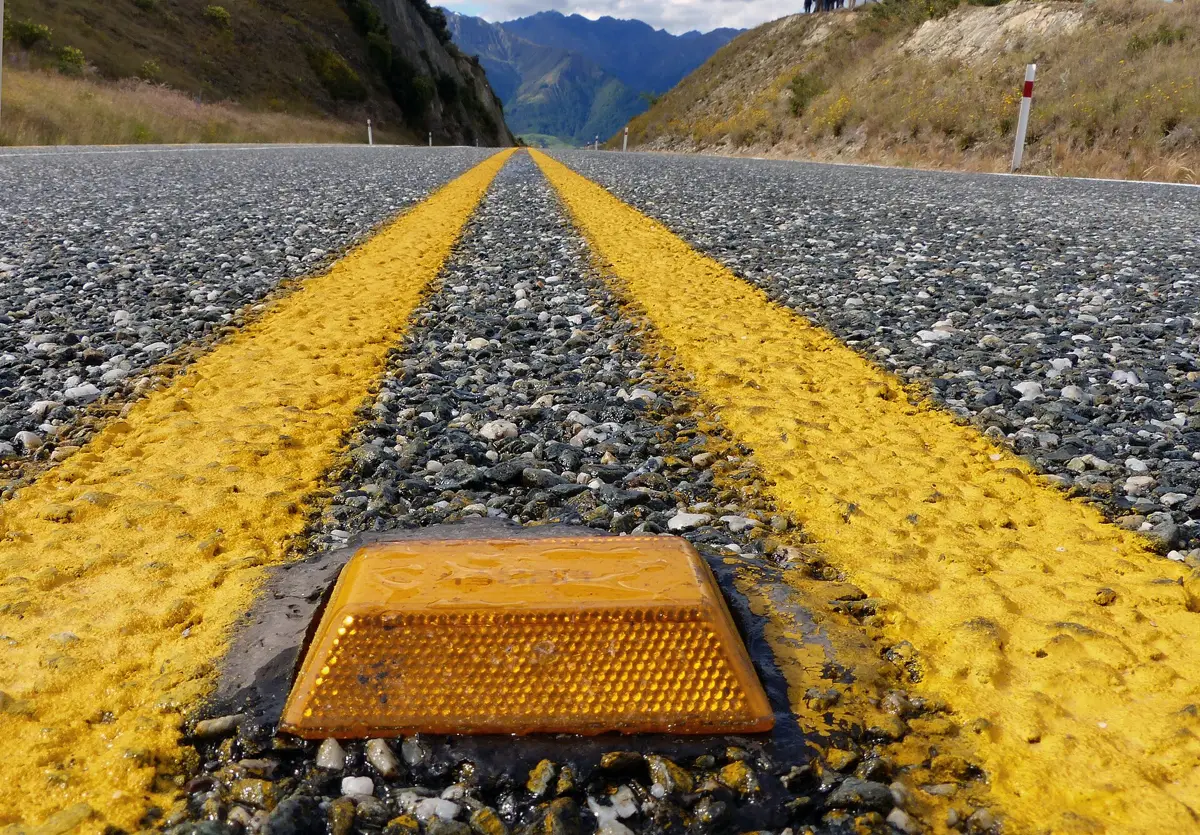
Cat’s eyes in the road

Little reflective studs sunk into the road surface and run over by every car.

Category: Streets & signs

Be the first to vote on this one.

Feature. They are built to be driven over.

Invented by Percy Shaw in Yorkshire in the 1930s, a road stud has reflective lenses set in a rubber pad. When a tyre runs over it, the lens is pressed down and wiped clean by the rubber and rainwater, so the stud keeps working.

Source: Cat’s eye (road), Wikipedia.

A cat’s eye road stud set between two yellow lines on a mountain road
Photo: Bernard Spragg. NZ, CC0, via Wikimedia Commons

Railway lines sit on loose gravel

Heavy trains thunder over a bed of loose stones that look as if they would shift.

Category: Streets & signs

Be the first to vote on this one.

Feature. The stones are the foundation.

The angular crushed stone, called ballast, spreads the load of the track onto the ground, holds the sleepers in place, drains water away and limits plants growing through. Sharp-edged pieces lock together.

Source: Track ballast, Wikipedia.

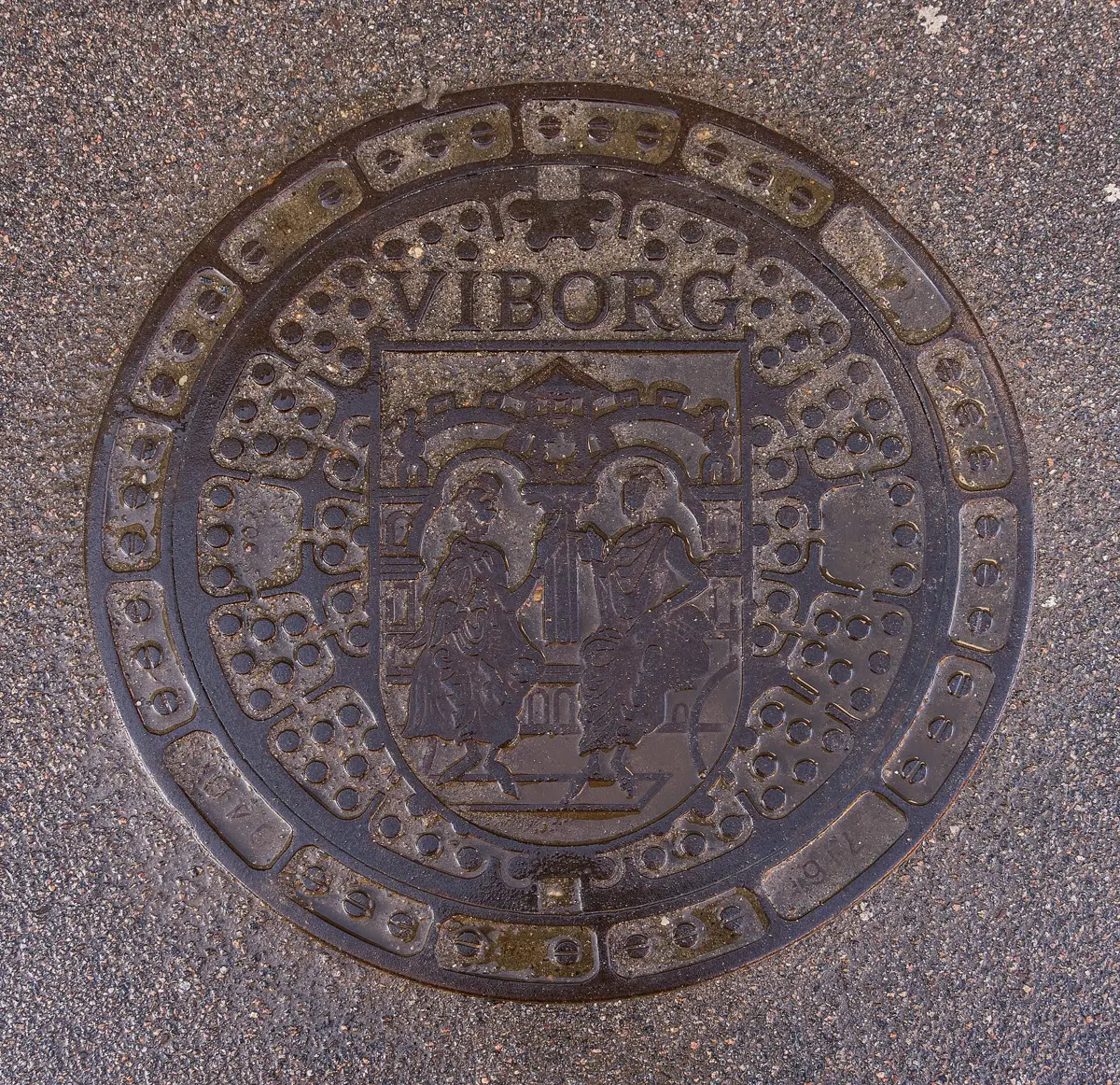
Manhole covers are round

A square or rectangular lid would be easier to make and fit. Yet nearly every manhole cover is a circle.

Category: Streets & signs

Be the first to vote on this one.

Feature. A circle can never fall through its own hole.

A round cover is the same width in every direction, so it cannot be turned and dropped down the hole it covers. It is also easy to roll and does not need to be lined up with the opening.

Source: Manhole cover, Wikipedia.

A round cast-iron manhole cover set in a pavement in Viborg, Denmark
Photo: Jebulon, CC0, via Wikimedia Commons

Grooves cut into the edge of the road

Noisy ridges along the hard shoulder or the centreline, which make the whole car shudder.

Category: Streets & signs

Be the first to vote on this one.

Feature. They are an alarm for sleepy drivers.

Rumble strips create a sudden noise and vibration when a tyre crosses them. The US Federal Highway Administration promotes them to alert drivers who are drifting off the road.

Source: Rumble strips, US Federal Highway Administration.

The bumpy yellow tiles at crossings

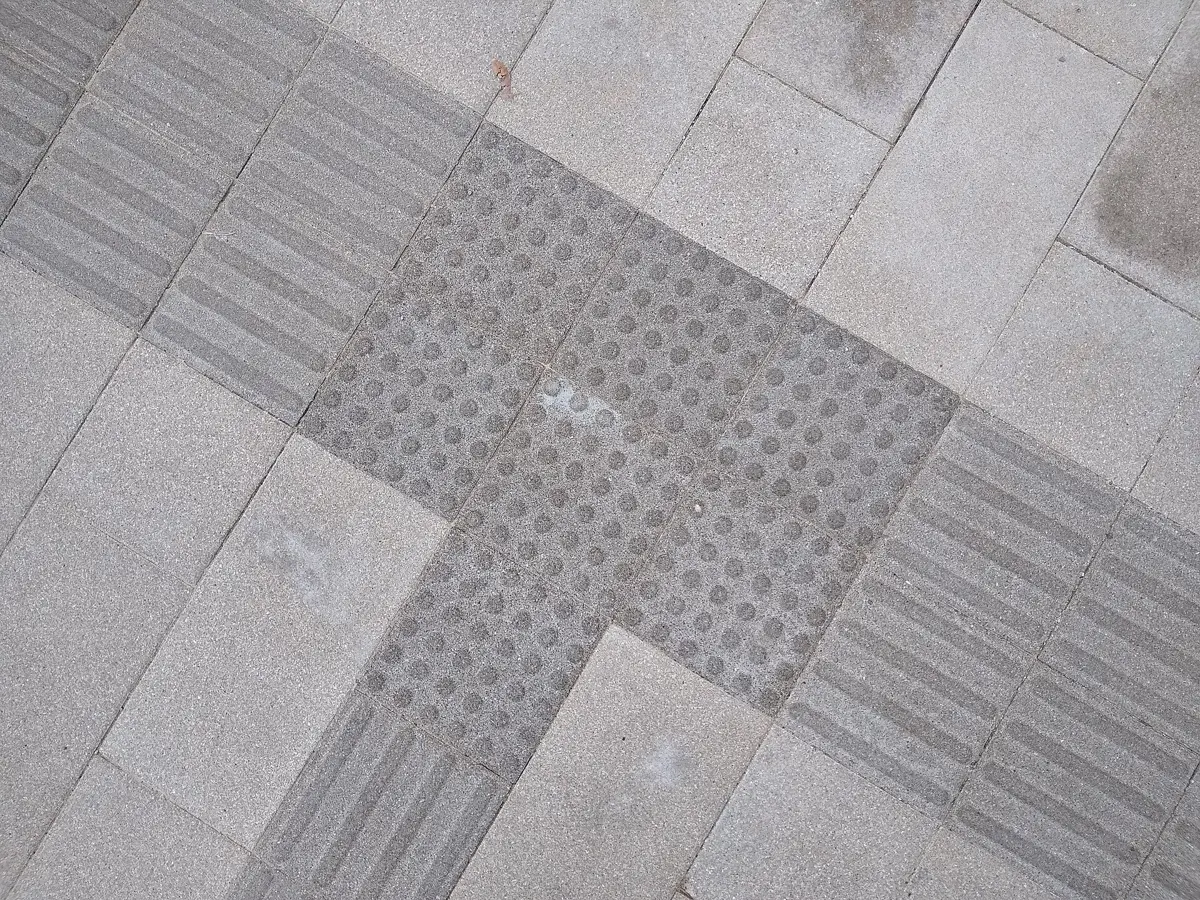
Pavement slabs covered in domes or bars, usually in bright yellow.

Category: Streets & signs

Be the first to vote on this one.

Feature. They guide people who cannot see the kerb.

Tactile paving was developed in 1965 by Seiichi Miyake in Japan and first introduced in a street in Okayama in 1967. The pattern tells you through your feet, or a cane, where to cross or where a platform edge is.

Source: Tactile paving, Wikipedia.

Grey tactile paving with domes and bars on a pavement in China
Photo: Mx. Granger, CC0, via Wikimedia Commons

Stop signs are octagons

Every other warning is a circle, triangle or rectangle. Why does Stop get eight sides?

Category: Streets & signs

Be the first to vote on this one.

Feature. The shape says Stop even from behind or under snow.

The octagon is a shape found on no other regular road sign, so it identifies itself by outline alone. That helps when the front is covered in snow or you are looking at the back of one.

Source: Stop sign, Wikipedia.

The metal teeth on a bridge

At the end of a bridge deck, interlocking steel fingers, noisy to drive over.

Category: Streets & signs

Be the first to vote on this one.

Feature. They let the bridge grow and shrink.

Steel and concrete expand with heat and contract with cold. Expansion joints take up that movement so the structure does not buckle or crack, and the finger design lets traffic cross the gap smoothly.

Source: Expansion joint, Wikipedia.

Power-station cooling towers curve inwards

A big concrete bottle-shaped tower, narrow in the middle, flaring at the base.

Category: Buildings

Be the first to vote on this one.

Feature. The curve is stronger and moves air.

The hyperboloid shape is built from straight lines, so it can be made of thin reinforced concrete yet stay stiff against wind. The narrowing also helps the warm air rise through the tower.

Source: Cooling tower: hyperboloid cooling tower, Wikipedia.

Gargoyles on medieval churches

Grotesque stone faces stuck out of cathedral walls, mouths open.

Category: Buildings

Be the first to vote on this one.

Feature. They are rainspouts.

A gargoyle is a carved water spout that throws rainwater clear of the wall so it does not run down and wear away the stone and mortar. Folklore says they ward off evil; the plumbing came first.

Source: Gargoyle, Wikipedia.

Wooden bridges with a roof

Why put a roof and walls on a bridge? Nobody needs shelter halfway across a river.

Category: Buildings

Be the first to vote on this one.

Feature. The roof protects the bridge, not you.

Covered bridges keep rain and sun off the timber structure, which would otherwise rot quickly. The cover is there to make the wooden bridge last, not for travellers.

Source: Covered bridge, Wikipedia.

The U-bend under every sink

Plumbers go to the trouble of bending the pipe into a U, which seems to make draining harder.

Category: Home & kitchen

Be the first to vote on this one.

Feature. The water that stays is a seal.

A trap keeps a little water sitting in the bend after the sink empties. That plug of water blocks sewer gas from rising back into the room.

Source: Trap (plumbing), Wikipedia.

The tiny plastic table in a pizza box

A white three-legged stool sits in the middle of the pizza, holding nothing.

Category: Home & kitchen

Be the first to vote on this one.

Feature. It keeps the lid off the cheese.

The pizza saver stops the box lid from sagging and sticking to the topping. It was patented in the US in 1985 by Carmela Vitale.

Source: Pizza saver, Wikipedia.

The hole in a teapot lid

A tiny hole in the lid of a teapot seems an invitation for the tea to go cold.

Category: Home & kitchen

Be the first to vote on this one.

Feature. It lets air in so the tea can come out.

When tea is poured out, outside air has to enter the pot. A vent hole in the lid, or a loose-fitting lid, stops the spout dripping and splashing.

Source: Teapot, Wikipedia.

The long earth pin on a UK plug

Of the three prongs on a British plug, the top one is longer, and in a sense it is the odd one out.

Category: Home & kitchen

Be the first to vote on this one.

Feature. It unlocks the shutters on the live and neutral holes.

The earth pin on a BS 1363 plug is longer than the others. It goes into its socket first and pushes open the shutters guarding the live and neutral holes, so a poked finger or key cannot reach them.

Source: BS 1363, Wikipedia.

Beer bottles are brown

Glass could be any colour. Beer, however, is traditionally sold in brown or green bottles.

Category: Home & kitchen

Be the first to vote on this one.

Feature. Brown glass guards the hops from light.

Light reacts with compounds in hops to make the sulphurous "skunky" smell in beer. Brown glass cuts out the light wavelengths that trigger this much better than clear or green glass.

Source: Chemists determine cause of "skunky" beer, Scientific American.

Ridges on the edge of coins

The edge of a pound or a dime is cut with fine grooves. Nobody checks the edge of a coin.

Category: Desk & tools

Be the first to vote on this one.

Feature. It began as a defence against thieves.

Gold and silver coins were worth their metal, so people shaved slivers off the edges and kept them. Britain introduced the milled edge in the 1660s so a clipped coin was easy to spot.

Source: The milled edge motif, The Royal Mint.

Dimples on a golf ball

A smooth ball looks like it should fly better. Golfers use one covered in dents.

Category: Desk & tools

Be the first to vote on this one.

Feature. Dimples help the ball fly further.

The dimples make the air flow near the surface turbulent, so it stays attached longer and leaves a smaller wake behind the ball. That cuts drag, and the dimpled ball travels much further than a smooth one.

Source: Golf ball, Wikipedia.

The groove down a sword blade

A long channel runs down the flat of many swords and knives.

Category: Desk & tools

Be the first to vote on this one.

Feature. It makes the blade lighter and stiffer.

This groove is called a fuller. Like the flange on an I-beam, it lightens a blade without losing much stiffness.

The myth: It is often called a "blood groove" and said to let blood run out. There is no good evidence for that purpose.

Source: Fuller (weapon), Wikipedia.

The loose hook on a tape measure

The metal tip rattles on its rivets. It seems badly made.

Category: Desk & tools

Be the first to vote on this one.

Feature. The play is exactly one hook thick.

The hook slides by about its own thickness. When you hook it on an edge it pulls out, and when you push it against a wall it slides in, so the zero mark is right for both outside and inside measurements.

Source: Tape measure, Wikipedia.

Saw teeth bent left and right

Look along a saw blade and the teeth point alternately to each side, as if it were damaged.

Category: Desk & tools

Be the first to vote on this one.

Feature. The cut is wider than the blade.

Bending the teeth outward, called set, makes a cut slightly wider than the blade. That leaves room for it to move and stops it jamming in the wood.

Source: Saw, Wikipedia.